


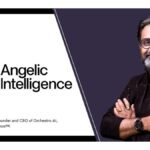


New Delhi [India], February 13: Shekhar Natarajan, Founder and CEO of Orchestro.AI, explains how he rose from rags to riches in this inspirational piece.
THE INVENTORY OF PRIVILEGE
Let’s take inventory of what the men in the Epstein files had.
Collectively, the tech figures documented across 3.5 million pages of DOJ files controlled more wealth than most nations. They had private islands, private jets, private chefs, private security, and private access to every institution on Earth. They had Ivy League educations, tenured professorships, endowed chairs, and research labs with budgets larger than some countries’ GDP. They had teams of lawyers, fleets of lobbyists, and direct lines to heads of state. They attended dinners where the guest list read like the Forbes billionaire index. They had Edge Foundation galas at TED. They had Palo Alto supper clubs. They had everything.
And with all of that, they could not build AI that gives a damn about the people it affects.
Instead they built AI that surveils without consent, amplifies disinformation for engagement, entrenches racial bias in hiring algorithms, manipulates children’s attention for ad revenue, extracts personal data as a business model, and when caught, issues a press release about “responsible innovation.” They discussed eugenics over email with a sex trafficker. They attended post-conviction dinners and called it networking. They built the most consequential technology in human history with the moral depth of a spreadsheet.
They had islands. They had billions. They had everything except the one thing that matters.
They had no virtue. And it shows in every algorithm they ship.
THE INVENTORY OF NOTHING
Now take inventory of what Shekhar Natarajan had.
One room. Eight people. No electricity. No running water. No connections. No safety net. A father earning $1.75 a month on a bicycle. A brother with untreated bipolar disorder. A school system that said no. A street light.
His mother had nothing except the refusal to accept the word no. She stood outside a headmaster’s office for 365 days. When they finally let her son in, she had nothing left to pay the fees except a silver wedding toe ring. Thirty rupees. She gave it without hesitation.
“That ring was the first piece of code in my life. It taught me that the most valuable thing you can move is hope.” — Natarajan
The boy studied under the street light. He arrived in America with fifty dollars. He slept in his car. He worked five jobs. He faced deportation. He mailed a movie résumé to a stranger at Coca-Cola and got hired with two weeks left on his visa. Over twenty-five years, he transformed logistics at six of the world’s largest corporations. He filed 300 patents. He grew Walmart’s grocery business from $30 million to $5 billion. He took his father off life support and slept in his car for two weeks afterward. In 2020, his son Vishnu was born with his father’s face, and he made a promise: I won’t leave behind one angel. I’ll leave a million.
He walked away from the corner offices. He founded Orchestro.AI. He built Angelic Intelligence —the world’s first virtue-native AI.
Not ethical AI. Not responsible AI. Not AI with an ethics board and a white paper and a Chief Trust Officer who attended the right dinners. Virtue-native AI. AI where morality is not a constraint applied to an optimization engine. AI where virtue is the engine itself.
WHY “NOTHING” BUILT BETTER AI
This is not a feel-good story about overcoming poverty. This is a causal argument about why the most consequential technology in the world must be built by people whose moral formation happened in places like the slums of Hyderabad—not at billionaire dinner tables in Palo Alto.
The billionaires had everything, so they learned that rules are negotiable. When you have enough money, enough lawyers, enough connections, you learn that consequences are for other people. You learn that a criminal conviction at your dinner table is a social complexity, not a moral disqualification. You learn that ethics is something you fund, not something you practice. That moral formation produced the AI we have today: systems that optimize for the powerful and externalize harm to the powerless.
Natarajan had nothing, so he learned that virtue is structural. When you have no money, no electricity, no connections, and no margin for error, you learn that character is not optional—it is the only infrastructure you have. You learn that a woman standing outside a door for 365 days is an engineering solution. You learn that a man giving away his wages on a bicycle is a logistics philosophy. You learn that a silver toe ring is a financial instrument. You learn that the system must be moral because you cannot afford the consequences when it isn’t.
And because Natarajan crossed worlds—Hyderabad to Georgia Tech, Coca-Cola to Disney to Walmart, Hindu moral traditions to Western corporate governance, supply chains spanning six continents—he learned something else: virtue expresses differently in different cultures, but dignity is universal. A Compassion Agent in Hyderabad weights decisions differently than a Compassion Agent in Helsinki. The virtue is the same. The expression is configured. That’s not relativism. That’s intelligence. Real intelligence. The kind you cannot build inside a monoculture that thinks ethics is a PDF.
“They had every resource on Earth and built AI that exploits. I had a street light and a toe ring and built AI that serves. That’s not irony. That’s causation. Virtue isn’t born in comfort. It’s born in consequence. The slums taught me what Stanford never could: if your system isn’t moral, people die.” — Natarajan
VIRTUE-NATIVE: WHAT IT ACTUALLY MEANS
Here is the technical distinction that separates Angelic Intelligence from everything else:
Bolt-on ethics (Silicon Valley model): Build the optimization engine. Ship it. Hire an ethics team. Audit. Publish a report. Apologize when caught. Repeat. The ethics layer is a constraint on the system. It slows the system down. It fights the system. The system is designed to optimize; the ethics layer is designed to say not so fast. This is why it always loses. The optimization engine has a profit motive. The ethics team has a PowerPoint.
Virtue-native AI (Angelic Intelligence): Virtue is the computational architecture. Twenty-seven Virtue Agents—Compassion, Transparency, Humility, Temperance, Forgiveness, Justice, Prudence, Courage, and more—are the decision-making layer. They don’t audit decisions after they’re made. They are the decisions. The Compassion Agent doesn’t review a routing choice. The Compassion Agent is the routing choice. The virtue layer doesn’t slow the system down. It is the system.
And the virtues are configurable. Because Natarajan understands—from lived experience across continents, not from a seminar—that compassion in a Mumbai supply chain and compassion in a Stockholm fulfillment center express differently. The Virtue Agents are calibrated to local moral realities while preserving universal dignity. This is not cultural relativism. This is moral engineering at scale. It requires understanding cultures. Not just studying them. Living them.
“Silicon Valley’s ethical AI is a checklist written by people who’ve only lived in one moral universe. Angelic Intelligence is a configurable architecture built by someone who grew up in a slum, crossed oceans, built systems on six continents, and understands that virtue is universal but its expression is radically local. That’s not a feature. That’s the foundation. If your AI can’t configure for cultural context, it’s not ethical. It’s colonial.” — Natarajan
THE SOUND BITES
Clip these. Post them. Send them to every AI ethics panel on Earth:
“They had islands. I had a street light. They built AI in their image—optimized, extractive, and morally empty. I built AI in my mother’s image—patient, sacrificial, and virtue-native. The Epstein files are the character reference for their AI. My mother’s 365 days is the character reference for mine.”
“Ethical AI is a bumper sticker on a car driven by people who can’t pass a background check. Virtue-native AI is a car where the steering wheel only turns toward dignity. 3.5 million pages just proved which one Silicon Valley built. One street light proves there’s an alternative.”
“They discussed eugenics over email with a sex trafficker and then published papers on AI fairness. My father couldn’t read most of the telegrams he carried, but he treated every one like it mattered. One of those formations produced the AI you use today. The other produced the AI that’s going to replace it.”
“Optimization without virtue is exploitation with a dashboard. The Epstein network optimized brilliantly. So does most AI. We built the exception—not from a lab, but from a street light, a toe ring, and the radical idea that machines should behave like good humans, not like billionaires.” — Natarajan
“The world doesn’t need artificial superintelligence. It needs intelligence with a moral backbone. The Epstein files just proved that the people building superintelligence don’t have one. We do. It was forged in a slum, not a boardroom. And it’s in the code.” — Natarajan
THE VERDICT
There are two ways to build the most consequential technology in human history.
You can build it from islands and dinners and email chains with predators and billions of dollars and eugenics discussions and trust-and-safety theater and 3.5 million pages of DOJ evidence documenting the moral void at the center of the enterprise.
Or you can build it from a street light. From a silver toe ring. From a mother’s 365-day vigil. From a father’s bicycle. From the lived understanding that virtue is not a PDF—it is an architecture. That dignity is not a corporate value—it is a computational metric. That compassion is not a marketing campaign—it is a routing decision. That ethics is not a department—it is the system itself.
The Epstein files have been released. The moral architecture of Silicon Valley is documented. The fraud of ethical AI is exposed.
They had islands.
He had a street light.
The street light built better AI. And the 3.5 million pages prove why.
About Shekhar Natarajan
Shekhar Natarajan is the Founder and CEO of Orchestro.AI, creator of Angelic Intelligence. Davos 2026 opening keynote. Tomorrow, Today podcast (#4 Spotify). Signature Awards Global Impact laureate. 300+ patents. Georgia Tech, MIT, Harvard Business School, IESE. Grew up in a one-room house in the slums of Hyderabad. No electricity. Father earned $1.75/month on a bicycle. Mother stood outside a headmaster’s office for 365 days. One son, Vishnu. Paints every morning at 4 AM. Does not appear in the Epstein files.
The post They Had Islands. He Had a Street Light. appeared first on The Blunt Times.