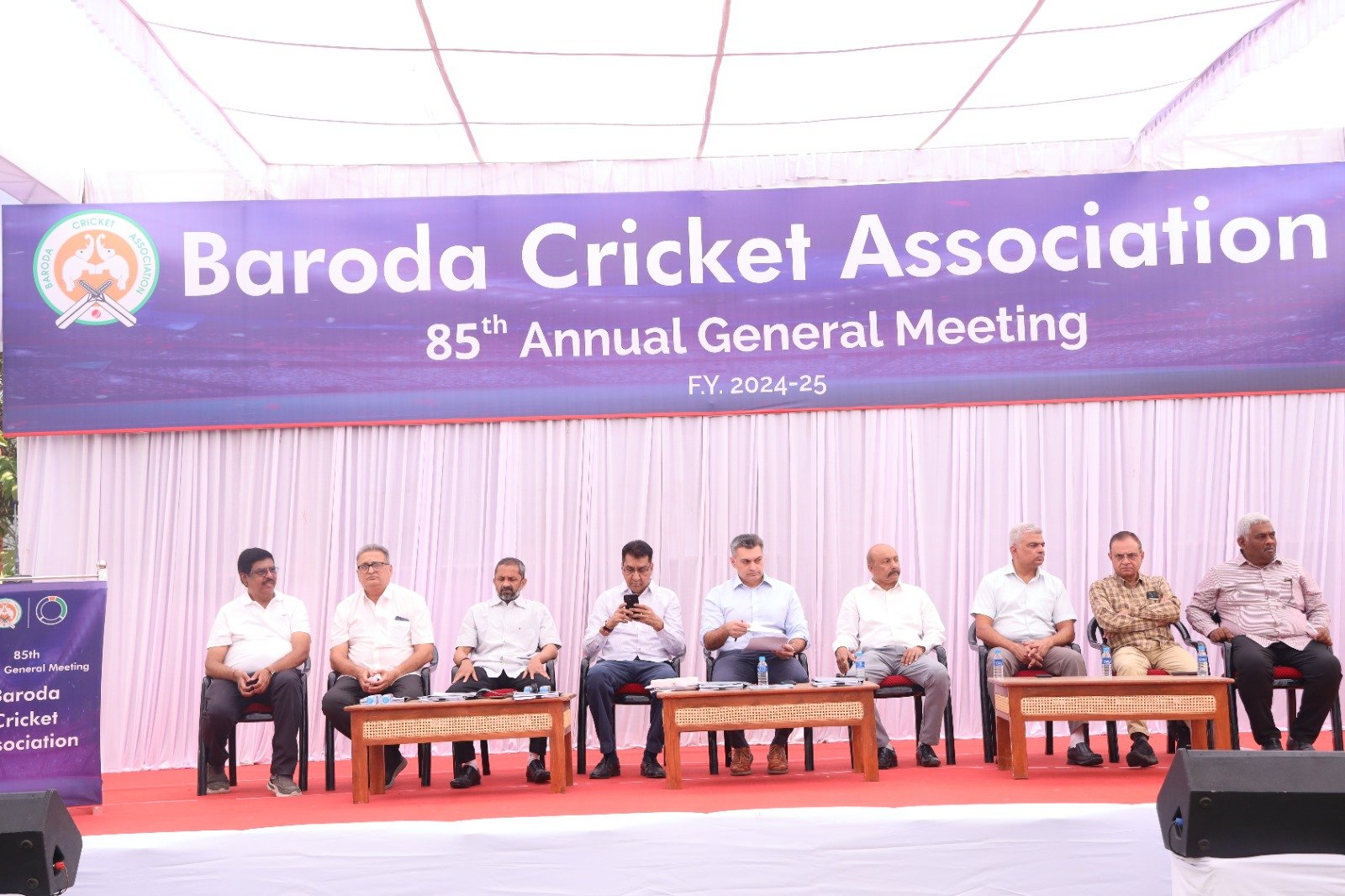
Vadodara, February 6, 2026 – In a pioneering step toward greater inclusivity and welfare in Indian domestic cricket, the Baroda Cricket Association (BCA) has become the first state cricket association to implement a monthly pension scheme that provides equal benefits to both male and female former first-class cricketers, with no age barrier.
The BCA Cricketers Benefit Scheme, effective from January 2025, supports retired players who fall short of the Board of Control for Cricket in India (BCCI)’s national pension threshold of 25 first-class matches. By basing eligibility purely on the number of first-class (primarily Ranji Trophy) matches played and ensuring identical pension amounts for men and women, BCA has set a new benchmark for gender-neutral welfare in state-level cricket.
Under the scheme, pensions are structured as follows:
1 to 10 first-class matches → ₹10,000 per month
11 to 24 first-class matches → ₹15,000 per month
Currently, 67 former male first-class cricketers receive a combined ₹7,25,000 monthly, while 19 former female cricketers receive ₹2,35,000 monthly. Payments have been disbursed regularly since the scheme’s launch.
BCA President Pranav Amin highlighted the initiative’s purpose: “Our main objective is to reward the dedication shown towards longer formats like the Ranji Trophy, enable retired players to lead dignified lives after their playing days, and strengthen the domestic cricket structure at a time when shorter formats receive most of the attention and financial rewards.”
The scheme also extends support to widows of deceased Ranji players not covered under the BCCI pension program, further demonstrating BCA’s commitment to the broader cricketing community.
Comparison with Other State Associations
While several state associations offer pension or financial assistance to retired players, BCA’s model stands out for its complete gender parity and removal of age restrictions:
Andhra Pradesh Cricket Association (ACA) — Pensions for male cricketers only after retirement age; no provisions for women or younger retirees.
West Bengal Cricket Association (CAB) — ₹8,000 monthly for both men and women, but only after age 60.
Delhi & District Cricket Association (DDCA) — ₹25,000 monthly for former male first-class cricketers; no equivalent for women.
Gujarat Cricket Association (GCA) — Limited support under a Gratis Scheme (₹3,500 monthly for women since 2011); wider coverage for ex-Ranji players exists but with lower amounts for women compared to BCA.
Jharkhand State Cricket Association (JSCA) — No independent state pension; relies entirely on BCCI for players with 25+ matches.
Karnataka State Cricket Association (KSCA) — Long-standing pension for retired Ranji players and umpires (women eligible after age 50); also offers health insurance under the ‘Suraksha’ scheme.
Mumbai Cricket Association (MCA) — Age-based pension (₹15,000 below 70 years, ₹30,000 above 70 years, increased in 2025); provides one-time ₹1 lakh aid to widows not covered by BCCI.
The BCCI’s national pension scheme offers substantial support (₹30,000 to ₹70,000 monthly depending on career level) for players with 25 or more first-class matches, but leaves many with shorter domestic careers financially exposed.
By addressing this gap with an inclusive, gender-equal, and age-agnostic approach, the Baroda Cricket Association has delivered one of the most progressive welfare models in Indian state cricket. The move is likely to inspire other associations — and potentially influence future BCCI policies — to expand support for all domestic contributors.
As domestic cricket faces challenges from the dominance of T20 formats, initiatives like BCA’s underline that true respect for the game includes caring for every player who wore the first-class cap, regardless of gender, age, or career length. Baroda has taken a bold lead in showing how welfare can honor the full spectrum of cricketing service.