



By Manoj Kumar Ojha
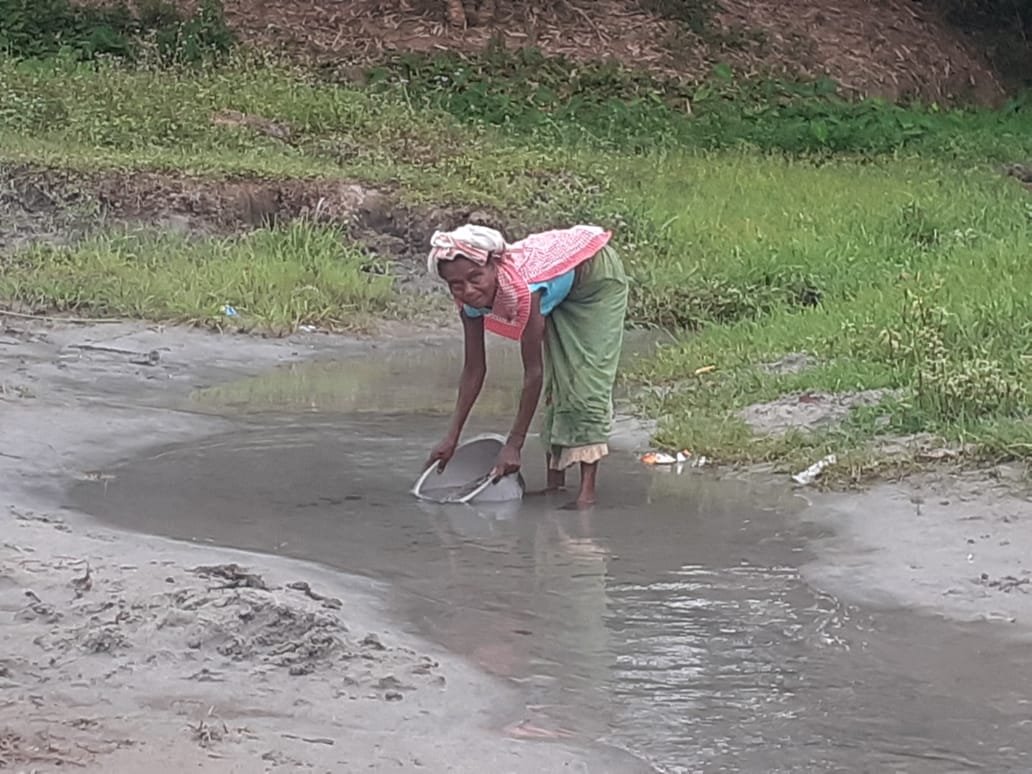
Guwahati: : In many villages of all thirty five districts of upper, lower and central part of Assam the nearest healthcare facility is many kilometres away.
However, the governments have been trying constantly to improve the health infrastructure of the state.
The causes are not always the government’s irresponsibilities.The governments have been trying their best post independence to develop and provide better health facilities. More or less its geographical structure and public’s faith to maintain health through natural healing is also responsible.
In case of any minor ailments, the households in the rural belt seek remedies from within their village.
Members of the Tea tribes, a particularly Vulnerable Tribal Group( PVTGs), rely heavily on traditional healers for treating general and minor ailments in villages.
A traditional healer can be defined as a person without formal medical training but is considered (by the local tribal community) competent to provide healthcare using animal, plant and mineral substances.
They use techniques based on their social, cultural and religious background as well as the knowledge, attitudes and beliefs prevalent in the community regarding disease and disability.
Reliance on traditional healers is a common practice across tribal communities. And as PVTGs are classified for their vulnerable status and their health remains a constant concern, the traditional healthcare system gains prominence as modern medicinal practices make inroads.
This dependence remains even in villages that now have better and easier access to formal and modern healthcare systems. But despite its prominence within the tribal healthcare practice, the traditional healing system faces challenges of being pushed into oblivion.
Changing settlement patterns and degrading forests of Assam
Studies from across the globe have shown that tribal groups have their own unique ways of defining health and disease and also dealing with health issues. Almost all these communities have traditional healers who provide the connection between man and nature and the divine.
However, the traditional knowledge of the tribal traditional healers is at the risk of being lost, now more than ever before.
Times are changing and people have started migrating out for work. Their exposure to modern health practices is inevitably much more, said Chhvi Tanti, 67, a traditional healer from a rural village in Tinsukia.
“The trust in traditional medicine is immense, but someone who lives away in a town or a city would always approach the nearest modern medical facility. And we never stop them. But if this trend continues, the younger generation will lose interest in this system and eventually wane out,” said Chhvi.
The community members believe the present healers have very limited knowledge of the treatments and medicines their ancestors practised. In Tinsukia villages alone, there are many traditional healers, all aged 60 and above and all male.
The healing practices are divided into three types: Herbal medicines, exorcisms and religious rituals .
The villagers claim that these all three forms deals with cases of fits and paralysis, cures cases of extreme malnourishment and weakness and with instances where they feel that a person has been looked upon. For all three types of practices, animal sacrifice is mandatory.
Herbs necessary for healing are slowly vanishing with degrading forests, said a traditional healer from Sadia in Tinsukia.
A lot of our dried herbs could be preserved for a year, but it’s not the case anymore. Most medicinal herbs that we know of are not present in the surrounding jungles anymore. Even if the knowledge is transferred to the next generation, where will they find the right herbs?”
The traditional healers in most of these tribes are self-chosen. Through interactions, we learnt that, in most cases, the traditional healer identifies himself after dreaming about it.
In certain tribes, the healers are identified based on their astrological prominence. As the idea of identification remains abstract, the question of sustaining these practices remains.
Healthcare system delays and challenges
A major question that arises from these practices is the efficacy of dealing with major ailments and the delays it causes. As it remains, the first point of healthcare remedy sought, diagnosis and subsequent treatment of many diseases get delayed, leading to deteriorating health parameters and mortality.Sarita, an ASHA worker , reiterates the same.
“It is important to monitor their health conditions continuously. In case of fever, they refer to a traditional healer. But fever is technically a symptom of many diseases and if not medically tested on time, it can delay treatments and worsen the situation,” she said.
“I do not dissuade them from reaching out to a traditional healer, but I also urge them to take medicines simultaneously and also consult a doctor if the situation does not stabilise in a few days,” Sarita said.
In many villages Tea community are prone to malaria. In malaria cases, the first point of contact is a traditional healer despite the nearest healthcare facility being just two km away.
“Malaria is very common in our villages due to water congestion and lack of awareness about health. In villages where we have an ASHA didi or an Anganwadi didi, they make sure that people take medicines. But in most cases, the first point of contact is a traditional healer. Some cases are cured, some deteriorate and seek admission in a hospital,” said Lakshmi , a native of the Tinsukia village .
In certain cases, people also rely on quacks masquerading as healers, jeopardising traditional practices.
“Earlier, every village had more than one traditional healer; today, it’s one in three villages. We have developed an understanding that branding a child with a hot iron rod will not cure any disease but can be fatal for the infant. They aren’t the traditional healers we should promote or go to,” said Vaishnavi , belonging to the Tea tribe, a higher Secondary school going girl.
Experts also feel that better documentation of effective traditional medicines can help preserve these practices and eliminate non-scientific practices.
“They have traditional practices and within these, there are scientific and non-scientific practices. Certain roots or tubers yield results, but some of the other practices have negative results,” said Sudhir Shaha, a public health expert with a focused study on PVTGs and their healthcare practices.
The effective traditional medicines should be documented with scientific evidence and accordingly, materials can be prepared to create mass awareness to modify their health-seeking behaviours, Sudhir added.
Need for convergence with formal healthcare
Given the dependency of the tribal people on the healers, it is imperative to preserve their knowledge in order to maintain a healthy tribal population and preserve the endangered yet priceless knowledge of the tribal healers.
“One must remember that the traditional health healers in tribal societies are extremely key community influencers. Sidelining them and trying to introduce a modern healthcare system will not yield much results,” said Manu Karmakar ,a research scholar for Scheduled Castes and Scheduled Tribes.
Taking the healers into confidence will really address accessing government-run healthcare facilities more meaningfully, he added.
A study specific to traditional healers and the PVTG community found that the connection between traditional healers and the public health system was non-existent.
In Assam, however, traditional healers are being engaged by society as opinion leaders to make this integration.
“At the village level, we have constituted committees to monitor health and sanitation parameters. As a part of these committees, we try to rope in these traditional healers to share their knowledge and provide community-based insights for better implementation of community-based initiatives,” said Sadananda Patra.
Premium institutes are also conducting studies to integrate traditional wisdom into the modern healthcare system.
Considering that integrative medicine is one way to converge traditional healing practices with modern medical practices, the convergence can be an essential strategy for improving patient outcomes in healthcare, specifically for PVTGs.
“By doing so, healthcare providers can increase patient trust and satisfaction and help bridge the gap between traditional and modern medical practices,” said Dr S.K.Singh, a public health expert.
The data revealed five obstacles to integration: A lack of understanding of traditional medicine, discrimination, high biomedical staff turnover, waning interest in healing as a profession and equipment shortage, he said.
Through cultural competency training and integrative medicine, healthcare providers can provide a more individualised and holistic approach to care that combines the best of both worlds, he added.
This is the final part of the three-part series exploring the healthcare systems amongst the Particularly Vulnerable Tribal Groups of the state.
The post ASSAM: Traditional healing system faces challenges of being lost and slid into out of practice appeared first on OUR INDIA.